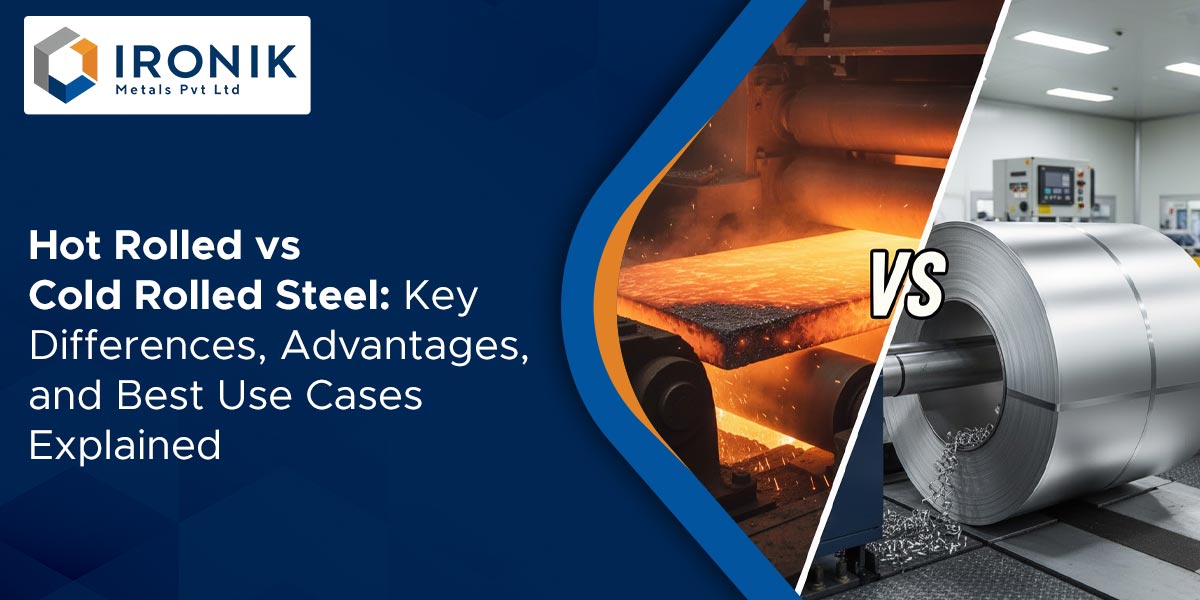
Steel shapes our work in many ways. From simple frames to large plants, we rely on steel that stays strong and safe. At IRONIK, we deal with both hot rolled and cold rolled steel every day, and we guide our buyers on which option fits their needs. Many of our clients ask how these two types differ. We wrote this guide to clear that doubt and to help you choose the right type.
Hot rolled steel starts with heat. The metal moves through high heat and softens. We then shape it while it is still hot. The surface cools in open air and forms a natural scale. The size may shift a bit during the cooling stage.
Hot rolling gives us steel that is easy to shape. We choose it for large builds, support beams, heavy frames, and long sheets. The strength stays firm, and the cost stays low, which suits many daily needs in our field.
At IRONIK, we supply hot rolled pipes, sheets, rods, and tubes to many plants. Our stock supports builders, fabricators, and makers who need tough steel for work that does not need tight size checks.
Cold rolled steel starts as hot rolled steel. But the next step sets it apart. We cool the steel and send it through rollers again. This step takes place at room temperature. It tightens the grain, shapes the metal with more care, and gives a smooth, clean feel.
Cold rolled steel has a neat look. The edges stay sharp. The size stays true. We choose it for parts that show or parts that need tight control. At IRONIK, we use cold rolled stock for tubes, pipes, sheets, and rods used in décor work, tools, and fit-out jobs.
To help you see the gap in a simple way, here are the core points:
When we guide our buyers at IRONIK, we ask them to list where the steel will go. This helps us steer them to the right type and grade. Many use both types in the same setup, based on the load and the place of use.
Hot rolled steel fits many core jobs in plants, yards, and building sites. We use it when the size can shift a bit, and the look does not matter. Typical use cases include:
At IRONIK, we supply all these forms with steady quality so our clients can build without worry.
Cold rolled steel suits neat work, light to medium frames, and parts seen by users. You may use it when you want a clean feel and a tight size fit.
Our team at IRONIK helps buyers match the grade and size so the final item stays stable and neat.
We know steel can confuse many first-time buyers. The terms feel heavy, and the choices feel huge. So we keep it simple. We listen to your needs, note the size, note the job, and then suggest the right stock. Our stainless steel pipes, tubes, sheets, and rods move to plants across India every week.
We also share samples when needed, so you can see the finish and judge the look. Many of our long-term clients trust us for a steady supply and quick support. We value that trust, and we keep our service fair and clear.
Here is a simple way to decide:
We follow this same rule with our stock at IRONIK. Many plants blend both types to strike a balance between strength, cost, and finish.
Hot rolled and cold rolled steel both serve vital roles in our work. Each type brings value based on heat, shape, cost, and feel. When we handle orders at IRONIK, we guide each buyer with care so they get the right match.
If you keep these points in mind, you will pick the right type with ease. And if you ever need support, our team at IRONIK is always ready to help you choose the right steel for your next job.


 Download Brochure