Strong buildings start with strong materials. When we plan safe and lasting structures, the right steel shape matters a lot. Structural steel squares give balance, strength, and long service life to many projects. As a trusted Structural Steel Supplier in Gujarat, we see how these square sections help builders create stable frames and reliable supports. At IRONIK, we work closely with engineers and builders who want dependable steel that performs well under pressure. Our work over the last thirty years shows that good steel choices lead to safer buildings and smoother construction work. Structural steel squares support homes, factories, warehouses, and public buildings with steady strength and consistent quality.
Why Structural Steel Squares Are Widely Used in Construction?
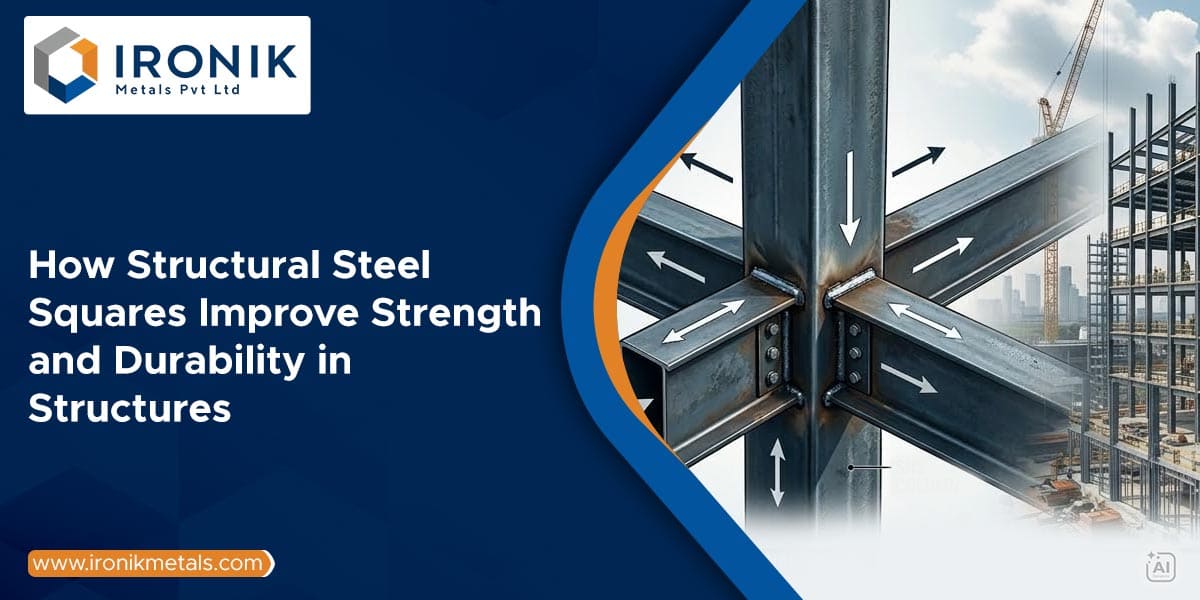
Square steel sections offer strength from every side. This shape spreads load evenly across the frame. When weight moves through the structure, the square profile keeps the pressure balanced. That balance lowers stress on joints and connections.
Builders trust square sections because they give reliable support for beams, frames, and columns. As a Structural Steel Supplier, we notice that projects using square steel often show better alignment and fewer structural issues during installation. At IRONIK, we guide clients toward steel shapes that support long-term safety and strength.
Another reason builders choose square sections is their neat geometry. Straight edges help welders, fabricators, and engineers work faster. Structures gain both strength and visual order when square steel frames form the backbone.
How Square Steel Sections Increase Structural Strength?
Square sections improve strength because their closed form resists bending and twisting. Open shapes sometimes bend under uneven pressure. Square tubes resist that movement because their sides support each other.
When we supply steel for buildings, bridges, or plant frames, we often explain the benefits clearly. Square sections distribute stress across four sides instead of two. That simple feature greatly increases structural stability.
At IRONIK, our experience shows that engineers value predictable strength in steel materials. Square sections provide that reliability because the shape handles compression and tension effectively. As a Structural Steel Squares Distributor in India, we see demand rising in many industries that need stable frames and heavy load support.
Durability Benefits That Make Structural Steel Squares Reliable:
Durability depends on how well a material resists wear, pressure, and time. Square steel sections perform well in each of these areas. Their closed design helps reduce internal stress that may weaken a structure.
When buildings face wind loads, vibration, or heavy machinery movement, the steel frame must stay steady. Square sections absorb those forces evenly. This reduces fatigue in the structure over many years.
At IRONIK, we also focus on the quality of steel composition. Good steel protects structures from early damage. As a Structural Steel Supplier in Vadodara, we supply sections that maintain shape and strength under demanding conditions. Builders value materials that support projects for decades without major repair work.
Common Applications of Structural Steel Squares:
Square steel sections serve many industries because of their strength and versatility. We supply these sections for both heavy and medium construction projects. Their balanced profile works well in frames that require uniform support.
At IRONIK, we often see square sections used in large commercial buildings where steady load distribution is essential. Engineers choose these sections when the structure must support both weight and movement safely.
Their shape also allows easy connection with plates, bolts, and welded joints, which simplifies fabrication work.
How Square Steel Improves Structural Design Flexibility?
Engineers often need materials that allow creative and practical design solutions. Square steel sections provide that flexibility. Their shape fits easily into many structural layouts without complex adjustments.
We support many projects where architects and engineers want both strength and clean design. Square profiles help maintain straight lines and balanced frames. This improves both function and appearance.
At IRONIK, we guide our clients in selecting steel sections that support both engineering and construction efficiency. Square steel also helps maintain proper alignment during assembly, which reduces time spent correcting frame positioning.
This advantage becomes important in large structures where even small misalignment can slow the entire project.
Advantages of Working with a Trusted Steel Supplier:
The strength of a structure depends not only on steel shape but also on the quality of supply. Builders need dependable partners who deliver consistent materials on time.
At IRONIK, our three decades of experience help us support construction teams with reliable steel supply. We work closely with fabricators, engineers, and project managers to ensure smooth delivery schedules.
These factors help construction teams avoid costly delays and material issues. Good supplier support often becomes the backbone of a successful building project.
Long-Term Performance of Structures Built with Square Steel:
Strong materials help buildings last longer with fewer repairs. Structural steel squares support this goal because their design limits weak points in the frame.
Over time, buildings face changing loads, weather impact, and vibration from use. Steel frames must remain stable through these stresses. Square sections resist distortion, which protects the entire structure.
At IRONIK, we often hear feedback from clients whose projects continue performing well years after construction. Durable steel reduces maintenance work and keeps structures safe for occupants and equipment.
Good material selection during the planning stage helps prevent structural problems later. Square steel sections offer long-term stability when engineers design reliable frameworks.
Practical Considerations When Choosing Structural Steel Squares:
Choosing the right steel section requires careful planning. Engineers consider load requirements, building height, and environmental conditions before selecting steel shapes.
Square sections often become the preferred option because they balance strength and efficiency. Their design allows even load transfer through the structure. This reduces stress on connection points.
When we work with project teams at IRONIK, we review structural needs and suggest suitable steel grades and sizes. Our experience across many industries helps us understand what different projects require.
Builders who choose high-quality structural steel often see better construction performance and stronger final structures.
Final Thoughts:
Strong construction begins with smart material choices. Structural steel squares give buildings dependable strength, balanced load support, and long service life. Their closed design improves durability while reducing stress within the structure.
At IRONIK, our experience across three decades shows that well-chosen steel sections make a real difference in building performance. When engineers, builders, and suppliers work together, structures become safer and more reliable.
Square steel sections continue to support modern construction because they combine strength, stability, and practical design advantages. For projects that demand lasting structural integrity, choosing the right steel shape remains one of the most important decisions in the entire construction process.


 Download Brochure