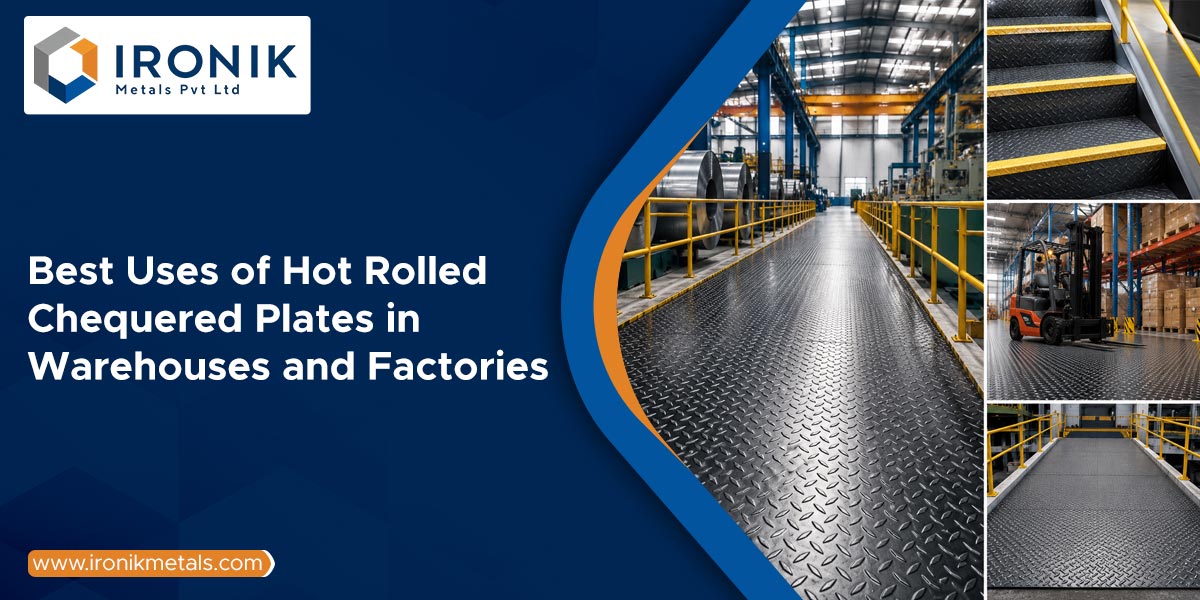
Maybe you’ve walked across a factory floor that felt unsafe under your feet. Oil, water, dust, or worn concrete can make each step feel uncertain. As a trusted Hot Rolled Chequered Plates Supplier in Ahmedabad, we at IRONIK often hear this concern from warehouse and factory owners. A safe floor may seem basic, yet it affects every working hour.
Small slips often happen without warning. A worker may carry a heavy box, push a trolley, or step down from a platform. One wrong step can cause pain, lost work time, and stress for everyone. At IRONIK, we believe floor safety deserves the same care as machines and tools.
A chequered plate has a raised pattern across its surface. This pattern gives shoes and wheels a firmer grip than plain steel. As a Hot Rolled Chequered Plates Dealer in Gujarat, we help buyers choose plates based on load, location, plate size, and daily use.
Hot rolling gives each plate good strength and makes large-scale production more cost-friendly. The surface can handle regular wear, heavy foot traffic, and tough work settings. IRONIK supplies these plates for both new projects and repair work across many types of industrial sites.
Warehouse staff often move quickly between racks, loading zones, and packing areas. Dust, torn wrapping, or small spills can make smooth floors risky. A Hot Rolled Chequered Plates Trader in Gurgaon can support projects needing firm walkways across busy storage spaces.
We often suggest marked steel walkways in areas shared by people and moving tools. Clear paths help staff stay away from forklift lanes and storage hazards. These walkways also give a neat structure to large warehouse floors.
At IRONIK, we usually ask a few simple questions before suggesting a plate:
Loading bays face constant movement from goods, carts, workers, and vehicles. Rainwater can also enter during loading, making smooth surfaces harder to trust. A Hot Rolled Chequered Plates Distributor in Gurgaon can provide plates for ramps, dock edges, and working platforms.
IRONIK has seen how one weak section near a loading bay can slow an entire shift. Workers become careful, trolley movement becomes harder, and goods take longer to move. A strong chequered surface gives better support while keeping the area easier to manage.
Factory stairs may collect grease, metal dust, or moisture during daily work. Plain steps can become unsafe, even when staff know the site well. A Hot Rolled Chequered Plates Supplier in Ahmedabad can help provide cut sizes for stair treads, ladders, and short access steps.
Raised patterns offer added grip, but good fitting still matters. We recommend firm fixing, even edges, clear lighting, and suitable handrails. A loose plate or sharp corner can create another risk, so skilled fitting should never be skipped.
Many factory machines need raised platforms for checks, control work, cleaning, or repair. These spaces may face oil drops, heat, vibration, and regular foot traffic. A Hot Rolled Chequered Plates Dealer in Gujarat can supply plates suited to such hard-working areas.
We at IRONIK understand that machine platforms must feel solid underfoot. The support frame, span, plate thickness, and expected load must work together. The chequered pattern adds grip, while the steel base supports regular use around heavy plant equipment.
A mezzanine can create useful storage or workspace without adding a new building. Yet the floor must support planned loads and regular movement. A Hot Rolled Chequered Plates Trader in Gurgaon can help source plates for steel-framed mezzanine floors and access routes.
Chequered plates are often chosen because each panel can be cut, moved, fitted, and replaced with less trouble. We can also inspect selected sections without breaking a full concrete surface. This makes later repair work more practical for a busy site.
Maintenance teams work around tools, oils, hoses, and open service pits. Safe footing becomes vital when attention stays focused on repair work. A Hot Rolled Chequered Plates Distributor in Gurgaon can supply covers and floor sections for planned service zones.
At IRONIK, we advise buyers to check how each pit cover will open and close. Weight, lifting points, support edges, and load limits need careful thought. A well-made cover should sit firmly without rocking, bending, or leaving a dangerous gap.
A ramp may connect two floor levels, a dock, or a machine platform. Even a small slope can feel unsafe when shoes or trolley wheels lose grip. A Hot Rolled Chequered Plates Supplier in Ahmedabad can provide plates for fixed ramps and short access bridges.
The raised design supports grip, but it cannot replace sound planning. We look at the ramp angle, expected load, drainage, edge guards, and fixing method. For wet areas, water must move away instead of collecting across the walking line.
Open drains and cable channels create serious risks across work areas. Removable chequered covers keep access available while giving workers a stable path. A Hot Rolled Chequered Plates Dealer in Gujarat can support custom size needs for trenches, channels, and floor openings.
IRONIK recommends checking the support below every cover. A thick plate can still bend when the frame lacks enough strength. Covers should also sit level with the nearby floor, since raised edges may catch shoes or small trolley wheels.
Many people first think about grip, but the value goes beyond that. A Hot Rolled Chequered Plates Trader in Gurgaon can serve many work zones where strength, access, and regular upkeep matter. We commonly see chequered plates used across:
Each space carries a different risk. A packing area may need easy cleaning, while a machine deck may face oil and heat. At IRONIK, we avoid treating every order as the same. We match the plate to the actual task and site conditions.
Price matters, but the cheapest plate may create higher costs later. A Hot Rolled Chequered Plates Distributor in Gurgaon should help you review thickness, pattern, width, length, grade, and quantity before the order moves forward.
We also suggest checking how the plate will be cut and fitted. Welded panels suit many fixed platforms, while bolted panels may help where future access is needed. Edge treatment matters too, since rough cuts can harm hands, cables, or nearby goods.
Plate thickness should match the load and the distance between supports. Heavy machines, loaded trolleys, and storage racks can place high force on a small area. A structural expert should confirm the design for raised floors, ramps, pits, and platforms.
A chequered pattern supports grip, yet dirt can settle between raised marks. Regular cleaning helps the pattern work as planned. We suggest removing oil, grease, loose wrapping, metal pieces, and standing water as soon as staff notice any build-up.
Checks should cover rust, bent corners, loose bolts, worn welds, and movement under load. Small damage often grows when left alone. Quick repair protects staff and may prevent a full panel change later.
Paint or other surface protection may help in damp or harsh spaces. The right coating depends on moisture, chemicals, heat, cleaning methods, and indoor or outdoor use. We recommend discussing these points before placing an order.
Most floor problems begin with something small: a loose edge, a wet patch, or a plate that flexes. We’ve seen this happen often. With more than 30 years of steel and metal experience, IRONIK helps us choose with care, from the first size check through supply.
A well-chosen chequered plate can make daily work feel safer and more controlled. It can support walkways, stairs, ramps, pits, platforms, and loading areas for years. When we match strength, fit, grip, and care, the whole site works with greater confidence.
Hot rolled chequered plates are used for walkways, loading bays, ramps, stairs, mezzanine floors, and work platforms needing strong, slip-resistant surfaces.
The raised pattern gives shoes and trolley wheels better grip. It helps lower slip risks in areas exposed to dust, oil, or water.
The right thickness depends on load, support spacing, and traffic. Most warehouse floors use plates between 4 mm and 8 mm thick.
Yes, but plate grade, thickness, frame support, and wheel loads must be checked. A structural engineer should approve floors carrying heavy equipment.
Yes, chequered plates provide firm grip on loading ramps. Proper drainage, edge guards, welding, and load checks are still needed for safe use.
No surface can prevent every slip. Regular cleaning, good drainage, safe footwear, clear lighting, and quick spill removal must support the raised pattern.
Untreated mild steel can rust when exposed to water or chemicals. Paint, galvanising, or another suitable coating can help protect the plate.
Plates can be welded or bolted onto a strong frame. Every panel should remain level, firm, and free from loose or sharp edges.
Yes, chequered plates work well for stair treads and access steps. Correct tread size, firm fixing, handrails, and good lighting remain vital.
Remove oil, water, dust, and waste often. Check for rust, bent edges, loose bolts, cracked welds, and movement during each planned safety check.
Yes, suppliers can cut plates for ramps, stairs, pits, trenches, and platforms. Accurate site measurements help reduce waste and fitting delays.
Check the grade, thickness, size, pattern, load needs, coating, test documents, and quantity. Also confirm cutting, transport, and delivery terms before ordering.


 Download Brochure