You may have seen a steel cage shift just before concrete pouring. At first, the movement seems small, but even a slight change can affect spacing and cover. As a trusted Binding Wire Distributor in Gandhidham, we know how much stress such moments cause on site. At IRONIK, we help you choose wire that holds each bar firmly without making daily work harder.
Many people tell us that all binding wire looks much the same. The real difference appears when bending and tying begin. A good Binding Wire Supplier in Gandhidham should offer soft wire with steady thickness and clean coils. We focus on these points because a weak tie can loosen while workers walk across the reinforcement.
Binding wire may form a small part of your material cost. Yet its role becomes clear when a steel cage must keep its shape. As a Binding Wire Trader in Gujarat, we often see buyers focus only on coil weight and price. We encourage you to consider softness, strength, surface condition and ease of use together.
You may be handling a house slab, factory floor, bridge or water tank. Each job needs accurate bar spacing before concrete fills the formwork. A dependable Binding Wire Dealer in Vadodara can help you match the wire with your site needs. IRONIK supports this choice with sound product knowledge built over 30 years.
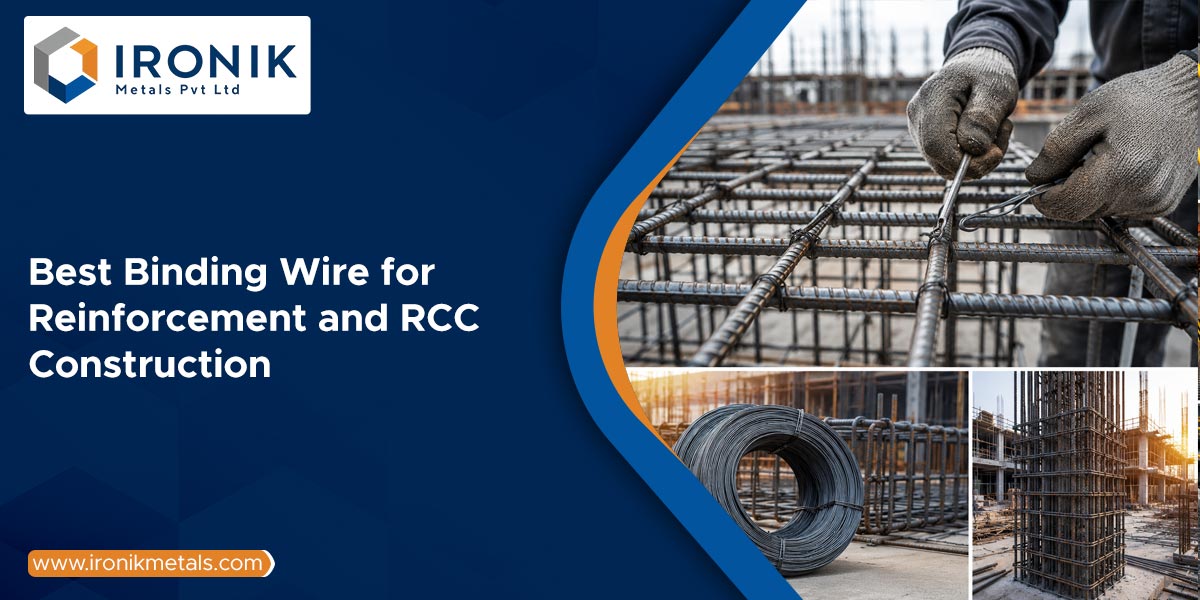
Binding wire keeps reinforcement bars in the planned position during site work. It does not replace the strength of TMT bars or concrete. Its job is to stop unwanted movement while workers place, walk over and pour concrete around the steel cage.
Most RCC work uses soft annealed mild steel wire. The heat process makes the wire easier to bend and twist. This softness helps workers make firm ties without repeated breaks or sore hands.
A smooth coil may look fine from the outside, yet poor wire often reveals itself during use. It may snap while twisting, form sharp bends or waste time through tangled loops. When choosing a Binding Wire Distributor in Gandhidham, we suggest checking actual site use instead of judging appearance alone.
At IRONIK, we look for a useful balance between softness and strength. Wire that feels too hard can break during tight twisting. Wire that feels too soft may stretch or fail to hold the bars firmly.
A reliable Binding Wire Supplier in Gandhidham should also guide you on size and packing. Site conditions can change the right choice. A small repair job may need easy-to-carry coils, while a large RCC site may need planned bulk supply.
Annealing changes the feel of mild steel wire without making it uselessly weak. The process reduces hardness, so workers can wrap and twist the wire around crossing bars. We prefer wire that bends smoothly and still holds each tie after tightening.
Many site teams use wire close to 16 or 20 gauge, based on drawings and work needs. Some project notes call for wire near 1 mm, while other jobs set a different size. IRONIK always asks you to follow the structural drawing, tender terms and engineer’s approval before placing an order.
We’ve seen this happen often: a buyer chooses thin wire to save money, then uses more wire at every joint. Breakage rises, tying slows down and labour costs increase. A trusted Binding Wire Trader in Gujarat can help you avoid this false saving by matching wire size with real site demands.
Reinforcement bars must stay in the planned position while concrete moves around the cage. Loose bars can disturb spacing, alignment and concrete cover. Firm ties help reduce this risk during handling and pouring.
Correct tying also supports the work of cover blocks, chairs and spacers. Binding wire alone cannot set concrete cover, yet secure ties help keep the full arrangement steady. At IRONIK, we remind buyers that every small item must work as one system.
A skilled worker selects each tie based on bar position and expected movement. Common tying methods include:
Your engineer or site head should confirm the suitable method. A responsible Binding Wire Dealer in Vadodara can supply sound material, but site control still decides how well each tie performs.
Have you watched workers stop again and again because wire keeps breaking? The delay may look minor at first. Across hundreds of ties, lost minutes turn into lost hours.
Soft, even wire allows faster cutting, bending and twisting. Workers can make secure ties with less hand strain. Clean coils also reduce tangles, loose ends and waste around the work area.
When IRONIK supplies binding wire, we consider more than the invoice rate. We think about ease of use, steady supply and the total cost of work. Cheap wire can become costly when breakage, waste and delays enter the picture.
Some buying mistakes happen because binding wire receives less attention than cement or TMT bars. As an experienced Binding Wire Distributor in Gandhidham, we help you check the small details before dispatch. This early care can prevent needless pressure when reinforcement work is already underway.
Storage matters more than many buyers expect. Keep coils in a dry, covered place and raise each bundle above the floor. Water and mud can damage the surface, create rust and make handling unpleasant.
A careful Binding Wire Supplier in Gandhidham should maintain clear packing and steady batch quality. IRONIK also helps you plan quantity based on the project stage, bar work and delivery schedule. This support reduces urgent buying when work reaches a key pouring date.
There is no single quantity that fits every project. Bar diameter, spacing, tie method, structural shape and site practice all affect use. Slabs, beams, columns, walls and foundations can each need a different tying pattern.
Many teams prepare a rough estimate as a share of reinforcement weight. We treat such figures only as a starting point. Your bar schedule, drawings and actual site method give a safer estimate.
When you speak with a Binding Wire Trader in Gujarat, share your reinforcement quantity and project type. Also mention the planned tie pattern, coil size and delivery stages. Clear details help us reduce both shortage and excess stock.
At IRONIK, we can support planned supply for small buildings and large industrial work. Our range also covers TMT, structural steel, stainless steel and alloy steel. This allows us to understand how binding wire fits into the wider steel order.
You don’t need a long technical meeting to check binding wire. A few direct questions can reveal whether the supply suits your work.
These questions protect more than your material cost. Good answers help workers tie faster, reduce breakage and keep reinforcement stable before the pour.
Steel buying often carries real pressure. A delayed load can stop workers, disturb a pour plan and affect every task that follows. We understand that pressure because we have worked with major industries for over three decades.
IRONIK supplies high-quality steel and metal products across Gujarat with care and clear service. We listen to your site needs before suggesting size, quantity or delivery plans. Our aim is simple: help you receive the right material when the work needs it.
A reliable supply choice should give you steady quality, honest details and prompt support. We believe binding wire deserves the same care as every major steel item. When each tie holds well, the whole reinforcement cage feels more secure.
Maybe binding wire seemed like a minor purchase before you started planning the RCC work. Once tying begins, its value becomes easy to see. Good wire supports faster work, cleaner handling and firmer bar placement.
IRONIK brings over 30 years of steel supply experience to every order. We help you choose binding wire based on practical site needs, not price alone. When you need sound material and reliable service, we’re ready to discuss your next reinforcement project.
Soft annealed mild steel wire suits most RCC work. It bends without breaking, holds reinforcement firmly, and helps workers complete ties with less strain.
Most RCC projects use 16, 18, or 20 gauge wire. Always follow the structural drawing and engineer’s advice before choosing the final size.
Binding wire often breaks due to excess hardness, uneven thickness, rust, or poor annealing. Ask for a sample and test several ties before buying.
Check the wire for even thickness, easy bending, clean coils, firm grip, and low breakage. Avoid coils with heavy rust, oil, or sharp bends.
The amount depends on reinforcement weight, bar spacing, tie style, and structure type. Use the bar schedule and site practice for a sound estimate.
Thin wire may cost less, but frequent breaks can increase waste and labour time. Choose a size that balances easy tying with a firm hold.
Binding wire does not add structural strength. It keeps reinforcement bars in position while workers place concrete, helping maintain planned spacing and alignment.
Not every crossing needs the same tie in all projects. Follow the approved drawing, site method, and engineer’s instructions for safe and correct placement.
Avoid wire with heavy rust, loose flakes, oil, or dirt. Light surface marks need a site check before use and approval from the engineer.
Keep coils under cover, away from rain and wet floors. Place each bundle on raised supports and protect opened coils from mud and moisture.
Correct coil weight supports fair billing and stock planning. It also helps site teams track daily use, waste, and the need for fresh supplies.
Ask about wire grade, gauge, coil weight, annealing, surface condition, test details, stock levels, and delivery time. Request a sample before placing a bulk order.


 Download Brochure