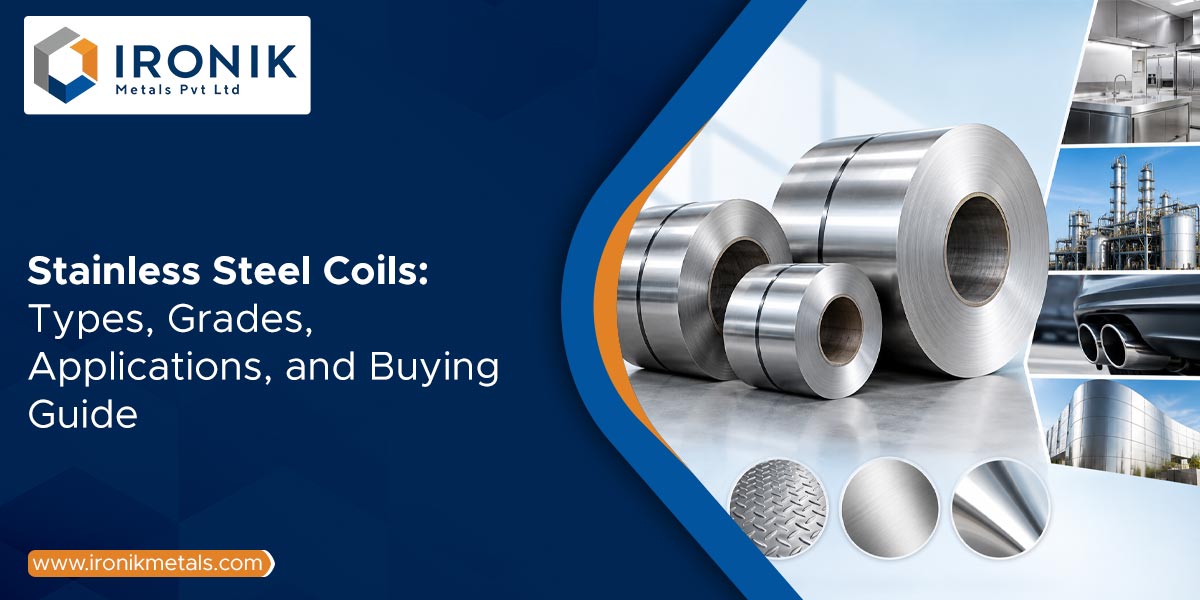
A steel coil may look simple until you need to choose one. Grade, finish, thickness, and use can quickly make the choice confusing. Many buyers tell us the same thing: one wrong detail can delay work and raise costs. As a stainless steel coils supplier in Gandhidham, IRONIK helps you understand each option before you place an order.
At first, a small grade change may not seem important. Yet it can affect rust resistance, strength, welding, forming, and product life. We’ve seen this happen often. A coil may look right on arrival but fail when exposed to heat, moisture, salt, or chemicals.
As a stainless steel coils supplier in Gujarat, we begin by asking where you plan to use the material. This simple question helps us guide you towards a coil that fits your needs.
Stainless steel contains chromium, which forms a thin shield on its surface. This shield helps protect the metal from rust and damage. Nickel, molybdenum, carbon, and other elements can change how the steel performs.
As a trusted stainless steel coils trader in Gujarat, IRONIK explains these differences in plain words. We want you to know what you are buying and why it suits your work.
Stainless steel is grouped by its inner structure and alloy mix. Each type has its own strengths, limits, and common uses.
Austenitic steel is widely used because it forms and welds well. It also offers good rust resistance across many indoor and outdoor settings. Grades 304 and 316 belong to this group.
As a stainless steel coils distributor in Gujarat, we often suggest austenitic coils for food tools, tanks, kitchen units, pipes, and building work. Your final grade should still match the actual setting.
Ferritic grades contain chromium but little or no nickel. These coils offer useful rust resistance and can be a sensible choice where extreme exposure is not expected.
As a stainless steel coils trader in Gandhidham, IRONIK supplies ferritic coil options for vehicle parts, appliances, kitchen items, and indoor fittings. We also help you compare strength, finish, and cost.
Martensitic steel has more carbon than ferritic steel. Heat treatment can make it hard and strong. It works well for parts that need hardness, wear strength, or a sharp edge.
Buyers working with knives, tools, blades, and some machine parts often consider this type. Before ordering, you should review hardness, heat treatment, and forming needs with care.
Duplex steel blends key traits from austenitic and ferritic steel. It offers high strength and good resistance to damage from chlorides. This makes it useful in harsh industrial settings.
As a stainless steel coils supplier in Gandhidham, we help buyers assess duplex coils for chemical plants, marine work, storage systems, and heavy process equipment. Correct grade choice remains vital.
Grade numbers can feel like a secret code when you see a long list. In practice, you only need to focus on your use, working conditions, and forming needs.
Grade 304 is one of the most common choices. It offers good rust resistance, clean looks, and easy forming. It is used in kitchen equipment, food units, tanks, panels, and many general products.
Through our work as a stainless steel coils supplier in Gujarat, we’ve seen 304 meet many daily needs. Still, it may not be enough for strong salt or chemical exposure.
Grade 304L has less carbon than standard 304. This can help reduce certain rust risks near welded areas. It is often chosen for tanks, pipes, and parts that need plenty of welding.
IRONIK can help you compare 304 and 304L based on welding, service conditions, and cost. The better choice depends on what happens after the coil reaches your workshop.
Grade 316 contains molybdenum, which improves resistance in salty or chemical settings. Grade 316L has a lower carbon level and is often preferred for welded work.
As a stainless steel coils trader in Gujarat, we commonly support needs linked with marine parts, food plants, medical tools, and chemical equipment. We can also help you compare 304 against 316.
Grade 430 is a ferritic stainless steel with good form and useful rust resistance. It is often more cost-friendly than grades with higher nickel content.
As a stainless steel coils distributor in Gujarat, IRONIK supplies grade 430 for appliance panels, kitchen items, trims, and indoor fittings. It suits many uses where mild exposure is expected.
Grade 2205 offers more strength than many common austenitic grades. It also performs well in settings where salt, pressure, or harsh process fluids can cause damage.
As a stainless steel coils trader in Gandhidham, we help you review whether duplex steel suits your fabrication process. Welding plans and service temperatures should be checked before purchase.
You may already handle stainless steel daily without thinking about it. It appears in kitchens, factories, hospitals, buildings, vehicles, transport systems, and storage plants.
As a stainless steel coils supplier in Gandhidham, IRONIK works with buyers from many such fields. We study the use before suggesting a grade, size, or finish.
The surface finish affects appearance, cleaning, grip, and use. A bright finish may suit decorative work, while a plain finish may work better for industrial parts.
Common finishes include:
As a stainless steel coils supplier in Gujarat, we suggest choosing the finish after checking use and fabrication. A decorative finish can suffer if later work includes rough handling.
Buying stainless steel coils should not begin with price alone. A low quote may feel helpful today but become costly after cutting, bending, welding, or installation.
As a stainless steel coils trader in Gujarat, IRONIK asks for these details before offering material. Clear details help us reduce errors and support smoother production at your end.
A material test certificate helps confirm grade, chemical mix, and key strength values. Depending on your work, you may also need proof of origin, test reports, or inspection records.
As a stainless steel coils distributor in Gujarat, we encourage you to state your document needs before dispatch. It is much easier to arrange records before the material leaves our stock point.
Stainless steel needs clean storage even though it resists rust. Contact with carbon steel dust, harsh chemicals, or standing moisture can stain the surface.
Keep coils covered, dry, and away from grinding work. Use clean lifting tools and avoid dragging the edges. Protective film should remain in place until your process requires its removal.
As a stainless steel coils trader in Gandhidham, we also discuss packing and transport based on distance and finish. Bright surfaces need more care than standard mill finishes.
Most buyers are not just looking for a coil. You may need steady quality, clear updates, correct documents, and material that reaches your site on time.
IRONIK brings more than 30 years of experience in steel and metal supply. We understand how one delayed or incorrect coil can slow an entire production plan.
As a stainless steel coils trader in Gujarat, we help you compare grades without making the choice feel harder. You receive clear support based on use, budget, and supply needs.
Our role as a stainless steel coils distributor in Gujarat includes helping you plan repeat orders and material sizes. This can reduce waste and make stock planning easier.
As a stainless steel coils trader in Gandhidham, we serve industrial buyers who value prompt replies and dependable supply. We stay involved from your first enquiry through dispatch.
You should not have to guess whether a grade will work. A short talk about use, exposure, size, finish, and fabrication can prevent many problems later.
At IRONIK, we treat each requirement with care because your production depends on it. Share your grade, thickness, width, finish, quantity, and delivery needs with us. We’ll help you make a clear and practical choice.
Grade 304 suits most general uses because it offers good rust resistance, easy forming, clean looks, and dependable performance in many settings.
Choose 304 for common indoor use. Pick 316 when your product faces salt, harsh chemicals, coastal air, or frequent contact with moisture.
Choose thickness based on load, forming method, product size, and expected use. Your fabricator or design team should confirm the final measurement.
Yes. Salt, harsh chemicals, trapped moisture, and carbon steel dust can damage the surface. Correct grade choice, storage, and cleaning reduce this risk.
Share the grade, thickness, width, finish, coil weight, edge type, quantity, delivery place, and test certificate needs for an accurate quotation.
A 2B finish is smooth and dull. BA looks bright and reflective, while No. 4 offers a brushed surface for visible applications.
Grade 430 can handle mild conditions but may struggle near salt or heavy moisture. Grades 304 or 316 often provide better outdoor protection.
A material test certificate confirms the grade, chemical mix, and key strength values. It also supports quality checks, audits, and material tracking.
Store coils in a clean, dry, covered space. Keep each coil away from standing water, harsh chemicals, carbon steel dust, and grinding work.
Dragging, dirty lifting tools, metal dust, poor packing, and rough storage can cause scratches. Protective film helps protect finished surfaces during handling.
Yes. Coils can be slit into required widths based on grade, thickness, minimum order quantity, machine limits, and your final production needs.
We review your use, working conditions, grade, size, finish, and budget. This helps you buy suitable material without guesswork or costly mistakes.


 Download Brochure