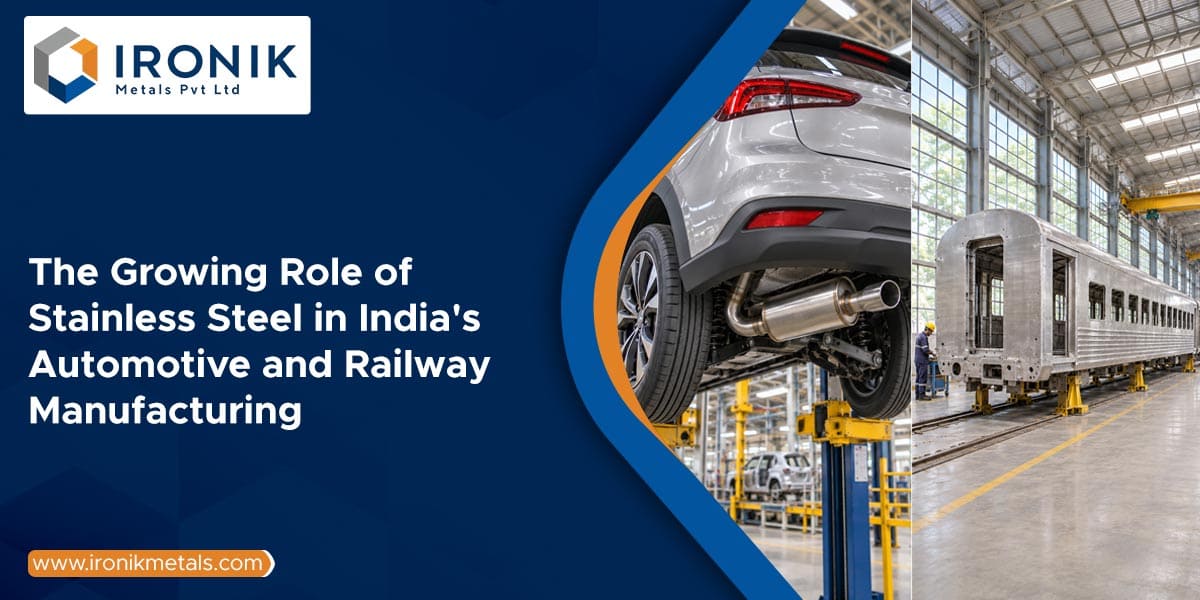
When we talk about better cars and trains, we usually picture smoother journeys, comfortable seats and fewer breakdowns. Fair enough. But much of that comfort begins with a material decision made long before assembly starts. IRONIK METALS brings over 30 years of steel and metal supply experience to this conversation. As a stainless steel coils supplier in Gujarat, we understand why choosing material for a vehicle component involves more than checking a price. You need steel that suits the job, works predictably during fabrication and holds up in service.
We put automotive and railway components through a lot. Heat, vibration, rain, cleaning chemicals and long operating hours all leave a mark. Around coastal Gujarat, salt exposure adds another consideration. A component that looks perfectly sound at dispatch still needs to perform after repeated exposure to demanding conditions.
Stainless steel helps because its chromium content forms a thin protective surface layer. That layer supports corrosion resistance, although we shouldn’t confuse resistance with immunity. Grade, surface condition and service environment still matter. Choose poorly, and even stainless steel can develop staining or localised corrosion.
IRONIK METALS offers stainless steel alongside TMT, structural and alloy steel for industrial requirements. In our role as a stainless steel dealer in Gujarat, we encourage you to start with the component’s working conditions. Where will it operate? What will touch its surface? Those answers give us a more useful starting point than appearance alone.
Think about an exhaust component during a busy working day. We heat it, cool it, expose it to moisture and repeat the cycle. That combination demands careful material selection. Stainless steel is widely used in exhaust systems because suitable grades provide a useful balance of heat resistance, corrosion resistance and cost.
We also find stainless steel in smaller automotive parts, including hose clamps and seatbelt springs. These aren’t glamorous components. Still, consistent performance matters enormously when a small part has a specific mechanical job.
When discussing automotive coil requirements with IRONIK METALS, you can approach us as a stainless steel coils trader in Gandhidham with the drawing and material specification ready. We recommend checking thickness, width, finish and mechanical properties together. A coil can meet a grade description yet still be unsuitable for your particular forming operation.
With electric vehicles, we move away from exhaust applications and consider different component needs. Selected brackets, protective parts and enclosures may suit stainless steel, depending on the design. But we shouldn’t assume that every electric vehicle needs stainless steel in every assembly.
We still have to balance weight, corrosion exposure, strength, joining methods and cost. Aluminium and other steels remain part of that discussion. Our aim should be a material choice that earns its place in the component.
A railway coach needs to withstand far more than its first journey. We have to consider repeated loading, vibration, weather exposure and frequent cleaning over a long service life. Repair access matters too. Replacing a damaged component can involve labour, downtime and disruption beyond the material bill.
We already see high-strength stainless steel grades such as 301LN and 304L used in Indian metro and railway coach applications. For example, stainless steel supply for the Mumbai Metro Line 3 project included these grades. That gives us a concrete example of stainless steel’s place in modern passenger transport.
IRONIK METALS serves industrial material requirements as a stainless steel coils supplier in Gandhidham. For railway-related enquiries, we encourage you to share the approved specification before discussing alternatives. Grade, strength condition, finish and documentation must match the application. A similar-looking coil isn’t automatically an acceptable substitute.
We should also distinguish coach construction from railway tracks. Stainless steel’s role in passenger vehicles doesn’t mean we use it as the standard material for running rails. Different jobs demand different material properties.
The question we hear in material discussions is straightforward: which grade should we choose? Our answer needs a little context. We can’t select responsibly from a grade number alone, especially when heat, forming or structural performance is involved.
We can use these distinctions as a starting point:
As a stainless steel coils supplier in Gujarat, we want your enquiry to describe the actual requirement. IRONIK METALS welcomes details about the component, fabrication process and exposure conditions. Where an approved drawing specifies a grade, we recommend following it and obtaining engineering approval before considering any change.
Good material selection doesn’t end when the coil arrives. We still need appropriate handling, tooling and fabrication practices. Scratches, contamination from carbon steel tools and unsuitable welding procedures can compromise the finish or corrosion performance.
Imagine a visible coach panel coming off the forming line with scratches that only become obvious under inspection lighting. The material may be usable structurally, yet finishing work and delays can follow. That’s why we should discuss protective film, surface requirements and handling before processing begins.
In our work as a stainless steel coils trader in Gandhidham, we encourage clear purchase specifications. Include tolerances, coil dimensions and the required surface finish. For repeat production, consistency between deliveries deserves attention too. Your workshop shouldn’t have to rediscover the same processing settings with every order.
We understand the pressure to control purchasing costs. Every quotation gets compared, and rightly so. But a lower material price can lose its appeal when we add rejected parts, extra finishing, premature replacement or production delays.
For a more useful comparison, we suggest checking:
IRONIK METALS supports these purchasing conversations as a stainless steel dealer in Gujarat. We encourage you to compare like-for-like specifications before comparing prices. Stainless steel isn’t always the lowest-cost answer, but for a suitable application, we can assess value across fabrication and service life.
We can make sourcing less stressful with a clear starting brief. Share your grade, dimensions, quantity, finish, delivery location and required date. Add the applicable standard and inspection documents where specified. If something remains undecided, flag it early.
As a stainless steel coils supplier in Gandhidham, we welcome that practical conversation at IRONIK METALS. Whether you’re planning an automotive component batch or sourcing for railway fabrication, we can begin with what your production team actually needs. A clear drawing, an honest deadline and the right questions give us something solid to work with.
Stainless steel combines corrosion resistance, strength and formability. Suitable grades help automotive and railway components withstand demanding service conditions while reducing maintenance needs.
Grades such as 301LN and 304L are used in railway coaches. IRONIK METALS recommends following approved drawings for grade, strength condition and finish requirements.
Grade 409 is commonly used for automotive exhaust systems. Final selection depends on operating temperatures, condensate exposure, fabrication requirements and the vehicle manufacturer’s specification.
High-strength stainless steel can allow thinner sections in suitable coach designs. Weight savings depend on structural calculations, fabrication methods and compliance with applicable safety requirements.
Salt exposure, unsuitable grades and surface contamination can cause corrosion. IRONIK METALS recommends specifying material according to exposure conditions rather than appearance alone.
Share the required grade, thickness, width, finish, quantity and delivery date. IRONIK METALS also recommends including tolerances, applicable standards and inspection requirements with your enquiry.
Request mill test certificates matching the supplied material, including heat identification, chemical composition and required mechanical properties. IRONIK METALS recommends confirming documentation requirements before ordering.
Use clean, dedicated tools, suitable protective coverings and controlled handling. Remove contamination and welding heat tint using appropriate procedures to protect surface quality and corrosion resistance.
Overall cost depends on exposure, fabrication, maintenance and replacement needs. IRONIK METALS recommends comparing total service costs alongside the initial purchase price.
Substitution requires approval from the responsible engineering authority. IRONIK METALS recommends checking strength, corrosion resistance, weldability and project specifications before accepting an alternative grade.
Surface finish affects appearance, cleaning and processing requirements. IRONIK METALS recommends specifying the finish and protective film requirements before ordering coils for visible components.
IRONIK METALS supplies stainless steel coils in Gandhidham. Share your approved specifications and quantities to confirm suitable material availability, documentation requirements and delivery arrangements.


 Download Brochure